
Luciano Giubbilei; an English Eye and a Squeeze of Lemon
Luciano Giubbilei’s garden at Chelsea in 2014 was one seen and not forgotten. It was the reason I bought his book - to have it in eye and mind again.
There have been other Chelsea gardens down the years that linger, and deservedly so. Luciano’s garden in 2014 was the perfect meeting of his Italian eye overlaid with a then limited exposure to the English sensibility. That garden reflected a particular moment of the psyche of the Italian garden meeting its English counterpart. A narrow aperture of view. At ease with sparseness and space that isn’t always English — Luciano, with James Horner, married this to a broader plant palette than would be found in gardens of his country. Clarity and calm aren’t always hallmarks of our gardens, they are of his. They were so to an extraordinary extent in this garden. They earned him Gold and Best in Show.
Giubbilei’s earlier work was highly architectural, minimal, a modern interpretation of the formal spaces, structures and volumes of Italian gardens. Seen through an English eye, what felt most instructive from this period of his work was not the formality of his structures, but the spaces they created. Their generosity, their volumes, their calm. Clear lines, repeated elements, a limited palette — these acts of editing operate to slow the viewer, the visitor, down. Without distraction, shadow, effects of sunlight, texture, and tonal plays matter more —even before time, weather and growth leave their marks.
The English garden tradition uses these effects differently, but still uses them. Behind the romantic looseness of the cottage garden with its tumbling stems and breadth of colour or the apparent naturalism of the landscape park, lies too a deep understanding of the importance of structure: paths that guide, hedges that hold the eye, views contained until released, rhythms that repeat until the ease of inevitability is assumed. The English garden isn’t often accidental; though we might pretend it so; with its own particular diffidence, it simply chooses to hide its discipline as unEnglish.
What is interesting about Giubbilei’s work and his path to learning at Great Dixter as described in his book is his recognition that he needed to learn more, to explore the English garden further, especially though the lens of plants, whilst never losing his Italian sensibility. He tells of his friend and mentor, Sir Paul Smith, asking him where was the squeeze of lemon in his life, the sharp acidity of a new minted memory, the challenge of the unknown. The creation of something unforgettable. He reminds us that memory is not always created out of high drama, an ‘atmosphere of a place, if perfect’ can also leave an indelible mark. We all need a squeeze of lemon in our lives.
Luciano’s descriptions of his learning at Dexter are familiar to all of us who grow, the excitement as things stir in the depth of winter, the catch of scent on still air, the deep silences, the sudden burgeoning in beds and borders, the feelings of physical groundedness, the calm.
The Giubbilei oeuvre post Dixter is markedly distinct from his early work, reflecting a new layered sensibility rooted in both his Italian past and his English plant apprenticeship at Dixter. Whether most recently at Raby Castle, which I am most looking forward to seeing later this month, in Tuscany in the Val d’Orcia, where waves of the softest, undulating planting sit in perfect harmony with his assured placement of sentinel trees and light reflecting water tanks, in Formentera or the almost Zen like, Potter’s House in Mallorca, his work keeps both in flawless, restful balance.
For us, this approach has sharpened our perspective on our own work, to be open to the squeeze of lemon, to continue to recognise the value of line, volume and shape and to allow expressive stems to play off that rigour — without ever losing it.
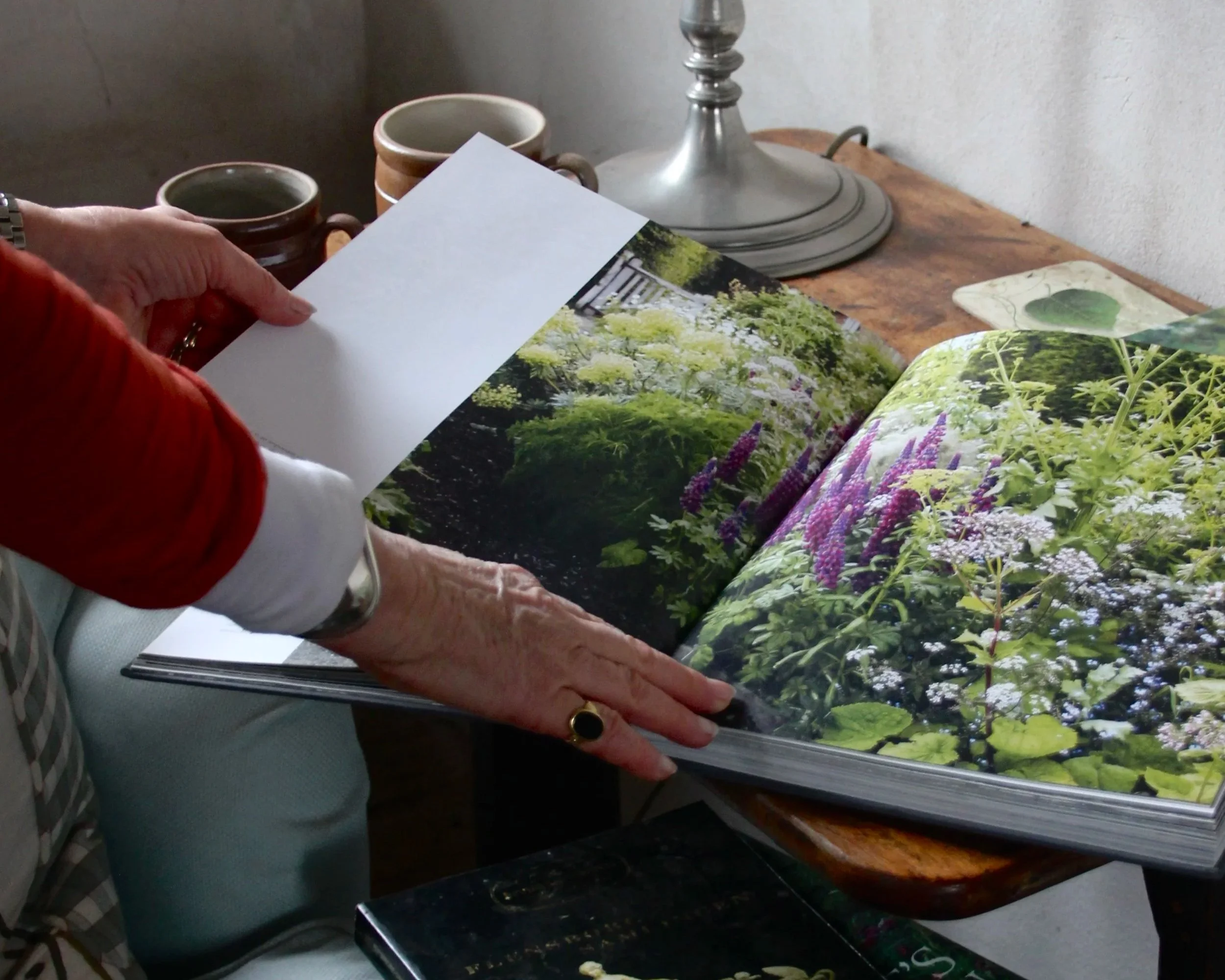
Luciano Giubbilei: The Art of Making Gardens